

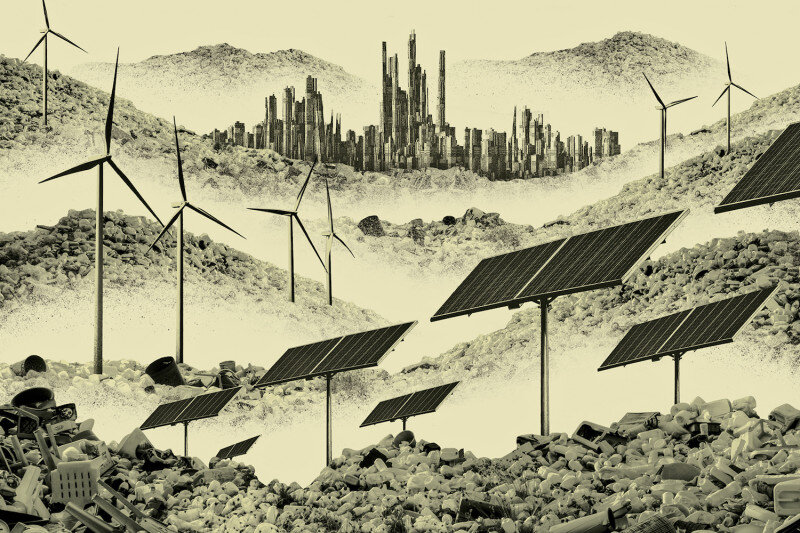
In the race to transition from fossil fuels to renewable energy, the world is increasingly reliant on critical minerals like lithium, cobalt, nickel, and copper. These are essential for building the batteries, solar panels, and wind turbines needed to power a greener future. But here’s the catch: while the intention behind renewable energy is to curb climate change and promote environmental sustainability, the mining required to extract these key materials is creating its own set of environmental and social problems. This is what many now call the “Green Paradox.”
The paradox lies in the fact that the very effort to reduce our reliance on environmentally destructive fossil fuels is contributing to another form of environmental degradation, one that is less visible but no less harmful. Mining, particularly in developing countries, is driving habitat destruction, water contamination, and community displacement at an alarming rate. While the world embraces renewable energy targets, communities near mining sites are facing ecological devastation and social upheaval.
The Scope of the Problem
The global demand for minerals is skyrocketing. Lithium, for instance, is expected to see demand increase by more than 40 times by 2040. The International Energy Agency (IEA) reported that clean energy technologies will require over 3 billion tons of minerals in the coming decades. This surge in demand has spurred a boom in mining activities worldwide, from the high deserts of Chile to the rainforests of the Democratic Republic of Congo.
However, mining is notoriously resource-intensive and environmentally damaging. The process requires large quantities of water, often in regions already facing water scarcity. For example, lithium mining in Chile’s Atacama Desert has led to a depletion of local water supplies, putting pressure on indigenous communities and fragile ecosystems. In the Democratic Republic of Congo, cobalt mining has not only led to environmental degradation but has also been linked to severe human rights abuses, including child labor.
The irony is palpable: renewable energy technologies, designed to reduce carbon emissions and mitigate climate change, are driving mining practices that threaten biodiversity, local water supplies, and community well-being.
Short-Term Gains, Long-Term Consequences
In many cases, mining projects are fast-tracked to meet the growing demand for clean energy technologies, often bypassing proper environmental impact assessments or failing to consult with affected communities. Local ecosystems are frequently the first to suffer. Forests are cleared, waterways polluted, and wildlife habitats disrupted. Once these ecosystems are damaged, the effects are often irreversible.
Moreover, many mining operations leave communities worse off than they were before. The influx of mining activities can bring short-term economic benefits, such as jobs and infrastructure, but these are often temporary. Once the mining boom fades, communities are left with degraded land, polluted water sources, and little in the way of long-term sustainable development.
A More Sustainable Path Forward?
It’s clear that the world needs to rethink how we approach the mining of critical minerals. Governments, industries, and international organizations are beginning to recognize the need for more sustainable and ethical mining practices. For instance, the European Union is pushing for stricter regulations on supply chains, ensuring that the minerals used in clean energy technologies are sourced responsibly. Similarly, some companies are exploring innovative ways to reduce the environmental footprint of mining, including recycling old batteries and improving efficiency in extraction processes.
But while these efforts are steps in the right direction, they may not be enough. The push for renewable energy is accelerating faster than these reforms can keep up. To truly address the Green Paradox, the world needs a more comprehensive strategy—one that includes not only better mining practices but also a focus on reducing overall material consumption and promoting circular economy principles. This could involve designing longer-lasting renewable technologies, investing in more efficient recycling systems, and encouraging energy conservation on a global scale.
Conclusion
The Green Paradox presents a critical challenge to the global energy transition. While the shift to renewable energy is essential for combating climate change, it cannot come at the expense of local communities and ecosystems. If the world is serious about creating a sustainable future, we must find a way to balance the need for clean energy with the equally pressing need to protect our planet’s remaining natural resources. Otherwise, we risk solving one environmental crisis while exacerbating another.
Sources
- International Energy Agency (IEA), Clean Energy Minerals Demand 2023 Report.
- United Nations, “Environmental Impact of Lithium Mining in Latin America,” 2024.
- European Union, “Sustainable Supply Chain Regulation for Critical Minerals,” September 2023.
- World Resources Institute, “Impact of Cobalt Mining on Local Communities,” 2023.
- The Guardian, “Water Crisis in Chile’s Lithium Mining Regions,” October 2024.