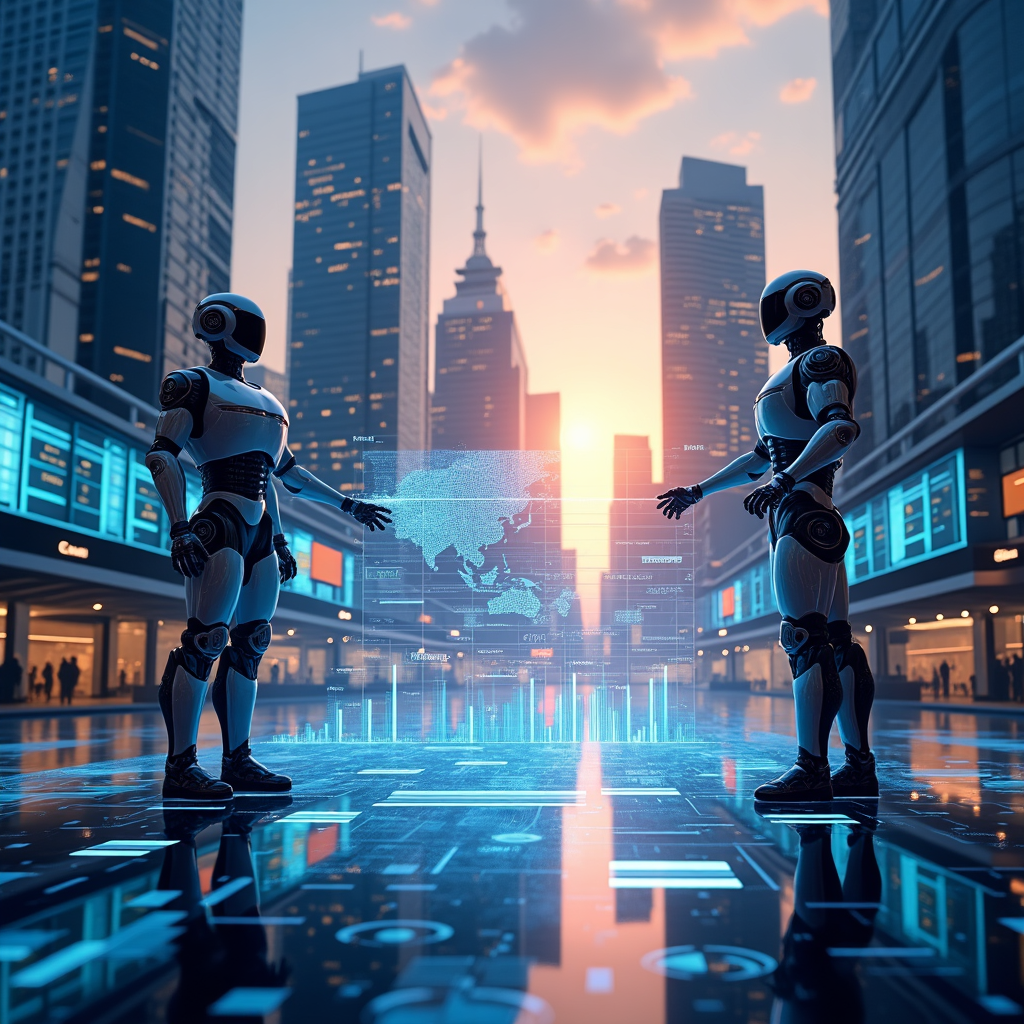

The rapid advancement of automation and artificial intelligence (AI) is reshaping economies worldwide, bringing both promise and challenges. These technologies offer significant benefits in terms of efficiency and innovation, but they also raise concerns about their impact on employment and economic equality.
The Potential of Automation and AI
Supporters of automation and AI believe these technologies have the power to transform industries by boosting productivity and cutting costs. In manufacturing, AI-powered machines can perform tasks with greater speed and precision than humans, resulting in higher output and fewer errors. In the healthcare sector, AI is improving diagnostic accuracy, enabling earlier and more effective treatments.
Moreover, the rise of these technologies has created new job opportunities, particularly in fields like data science and AI development. These positions often require specialized skills and offer higher wages, providing job security for those who can meet the demands of a technology-driven economy.
The Challenge of Job Displacement
Despite these advantages, the rapid implementation of automation and AI poses significant risks, especially for workers in lower-skilled jobs. Automated systems are replacing human labor in sectors like retail, customer service, and logistics, leading to concerns about widespread job losses. This shift could widen economic inequality, as workers who lack the skills to transition into new roles may find it difficult to secure employment.
The potential for large-scale unemployment raises critical questions about the future of work. As machines take over tasks that were once performed by people, the challenge will be to ensure that workers are not left behind in the transition.
The Role of Monetary Policy
As these technological changes unfold, the Federal Reserve’s approach to controlling inflation, particularly through interest rate hikes, plays a key role in shaping the economic environment. Some critics argue that these measures can disproportionately affect lower-income households by increasing borrowing costs and slowing job creation, particularly in sectors where automation is becoming more prevalent.
Policymakers face the challenge of balancing price stability with the need to promote inclusive economic growth. If not managed carefully, monetary policy could exacerbate existing disparities, widening the gap between those who benefit from technological advancements and those who do not.
Navigating the Future
The intersection of AI, automation, and monetary policy highlights the complexities of managing the modern economy. As these technologies continue to develop, it will be essential to address the risks they pose and ensure that their benefits are widely shared. This may involve rethinking education, job training, and social safety nets to help workers adapt to a rapidly changing labor market.
The road ahead requires thoughtful policy decisions that consider both the potential of these technologies to drive progress and the need to protect those at risk of being left behind. The central question remains: Will automation and AI lead to widespread prosperity, or will they increase unemployment and deepen economic inequality? The answer will depend on how effectively we navigate the challenges and opportunities that these technologies present.